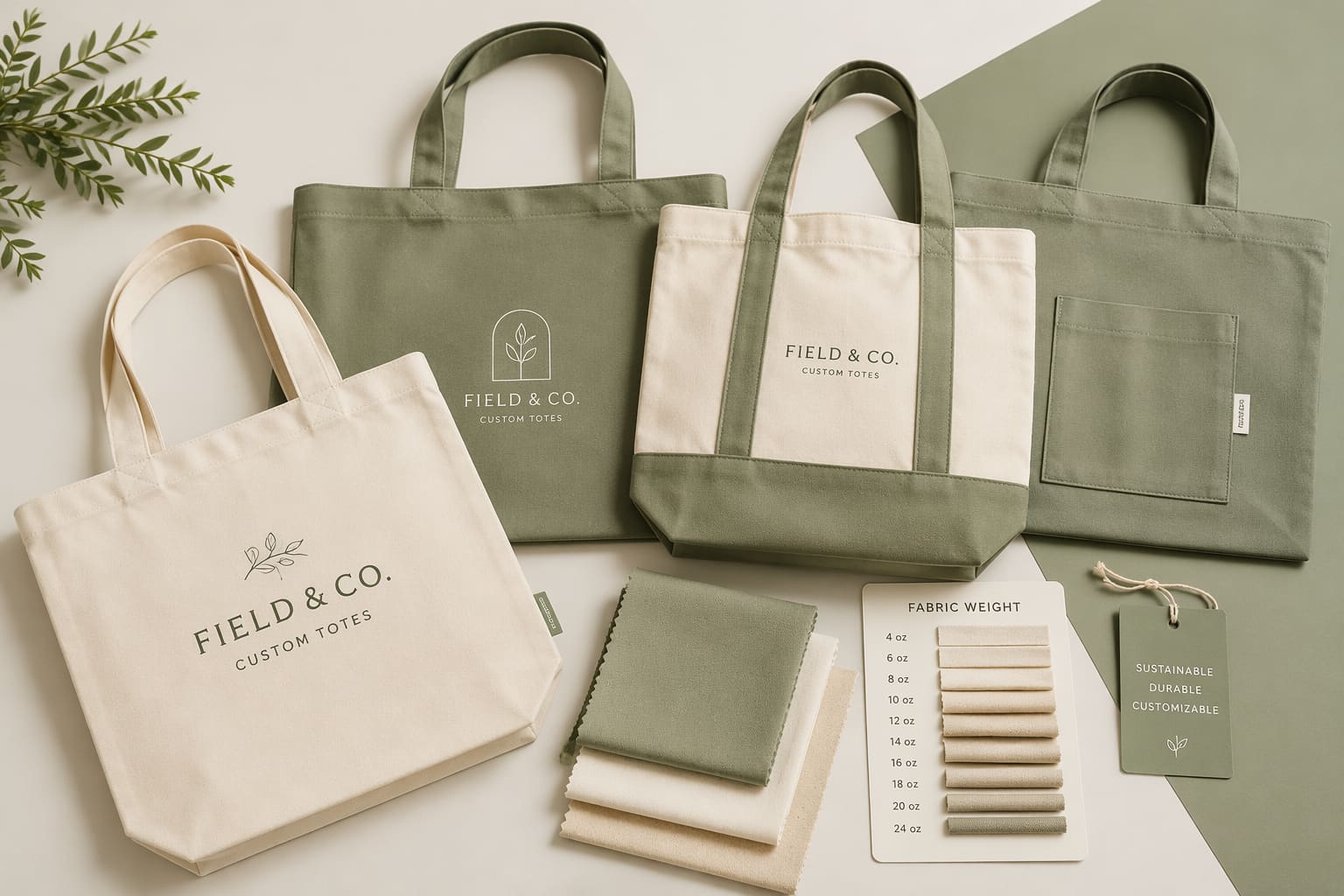
Start with the end use, not the price
The most expensive sourcing mistakes happen when buyers lead with unit price instead of end use. A promotional tote, a retail tote, and a higher-priced boutique shopper require different fabrics, construction, and cost structures. Before requesting a quotation, define who carries the bag, what it carries, and the expected use. These product requirements drive every decision below.
A manufacturer should clarify these points before preparing a project-specific quotation. Compare the included material, dimensions, construction, branding, packaging, and commercial terms rather than unit price alone.
Choose the right material
Cotton canvas
Common in retail and lifestyle totes. Specify fibre composition, fabric weight, weave, shrinkage, and printing requirements. Organic or recycled claims require order-specific documents.
Recycled polyester
Available in different yarns and weaves. The recycled percentage and source category must be supported by current documents for the selected order.
Non-woven polypropylene
Often considered for higher-volume promotional programs. Specify material weight, seam construction, print method, load requirement, and expected reuse rather than comparing on unit price alone.
Jute & juco
A visibly textured option for grocery, gourmet, gift, and rustic-positioned retail. Confirm fibre blend, odor, shedding, color variation, print result, and handle construction on the sample.
Build the first tote range around material minimums
Minimum order quantity (MOQ) is affected by fabric procurement, custom dyeing, printing setup, construction, and packaging. It should be confirmed per style and color after the specification is reviewed, not presented as one universal number.
To control the first order, consider one base construction with different artwork, fewer initial colorways, or a suitable stock fabric. Ask how each option affects unit price, color control, replenishment consistency, and material documentation.
Approve the tote in a physical pre-production sample
Do not release bulk production from photographs alone. A pre-production sample (PPS) should confirm the selected fabric, color, print registration, handle dimensions, stitching, loaded shape, and branding against the written specification. Agree the sample charge, lead time, revision rounds, and any credit arrangement in writing before sampling.
Measure the sample against the specification and record all comments by version. Where relevant, review fabric records, care testing, handle attachment, and loaded performance. Complete another sample round if a critical requirement is not met.
Cost drivers in a printed tote program
Fabric weight and composition (organic/recycled costs more)
Print method and number of colors (screen print vs. full-color transfer)
Construction details — gussets, linings, zippers, reinforced handles
Order volume — unit price drops meaningfully past 3,000–5,000 pcs
Certifications and testing (GRS, GOTS, Prop 65, REACH)
Packaging requirements (polybag, hangtag, barcode label, and master carton)
Define tote inspection criteria and production milestones
Quality control should be defined in the order specification. If acceptance sampling is used, state the inspection level, acceptance quality limit (AQL), critical, major, and minor defect criteria, and the dimensions, color, printing, workmanship, cleanliness, and packaging checks. AQL is an indexing value for a sampling plan, not a fixed percentage of defects permitted in every batch.
Build the schedule from material confirmation, sampling and revisions, sample sign-off, bulk production, final random inspection, and transport. Lead time depends on material availability, printing, quantity, and capacity. Record milestones and the required delivery date in writing.
FAQ
What is a typical MOQ for custom tote bags?
MOQ depends on fabric procurement, dimensions, colorways, printing, construction, and packaging. Ask the supplier to state the minimum per style and color after reviewing the specification.
How long does a custom tote bag order take?
Plan material confirmation, sampling and revisions, sample sign-off, bulk production, final inspection, and transport separately. Confirm written milestones after the specification, quantity, and material availability are known.
Can I get eco-friendly certified tote bags?
Potentially, depending on the selected material and supplier documentation. Ask for the current recycled-content or organic-fiber documents and relevant test reports for the exact order before using a certification claim in marketing or compliance materials.
Should I pay for samples?
Usually. A sample charge may cover material, tooling, printing setup, and labor. Whether it is credited against a bulk order must be agreed in writing before sampling.
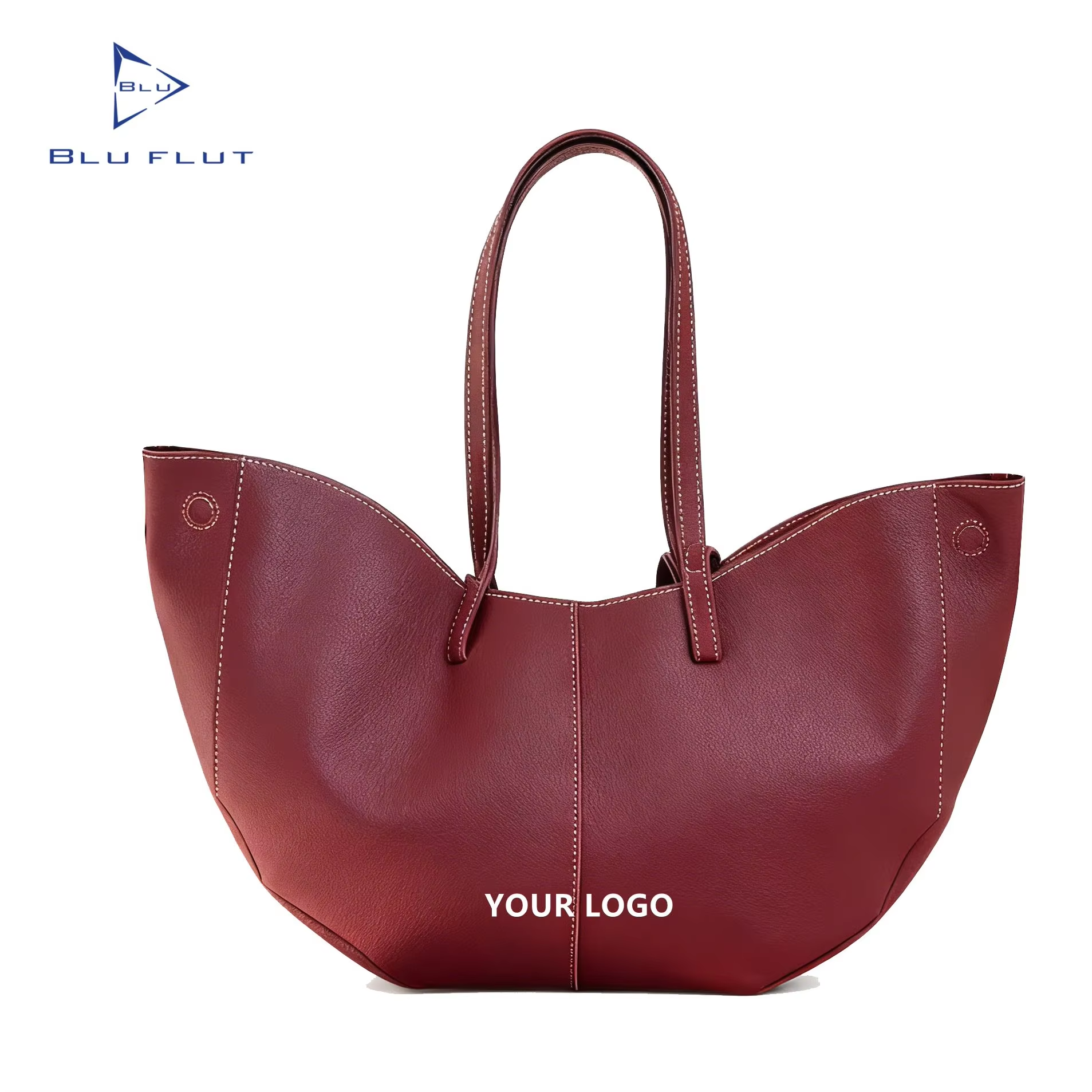
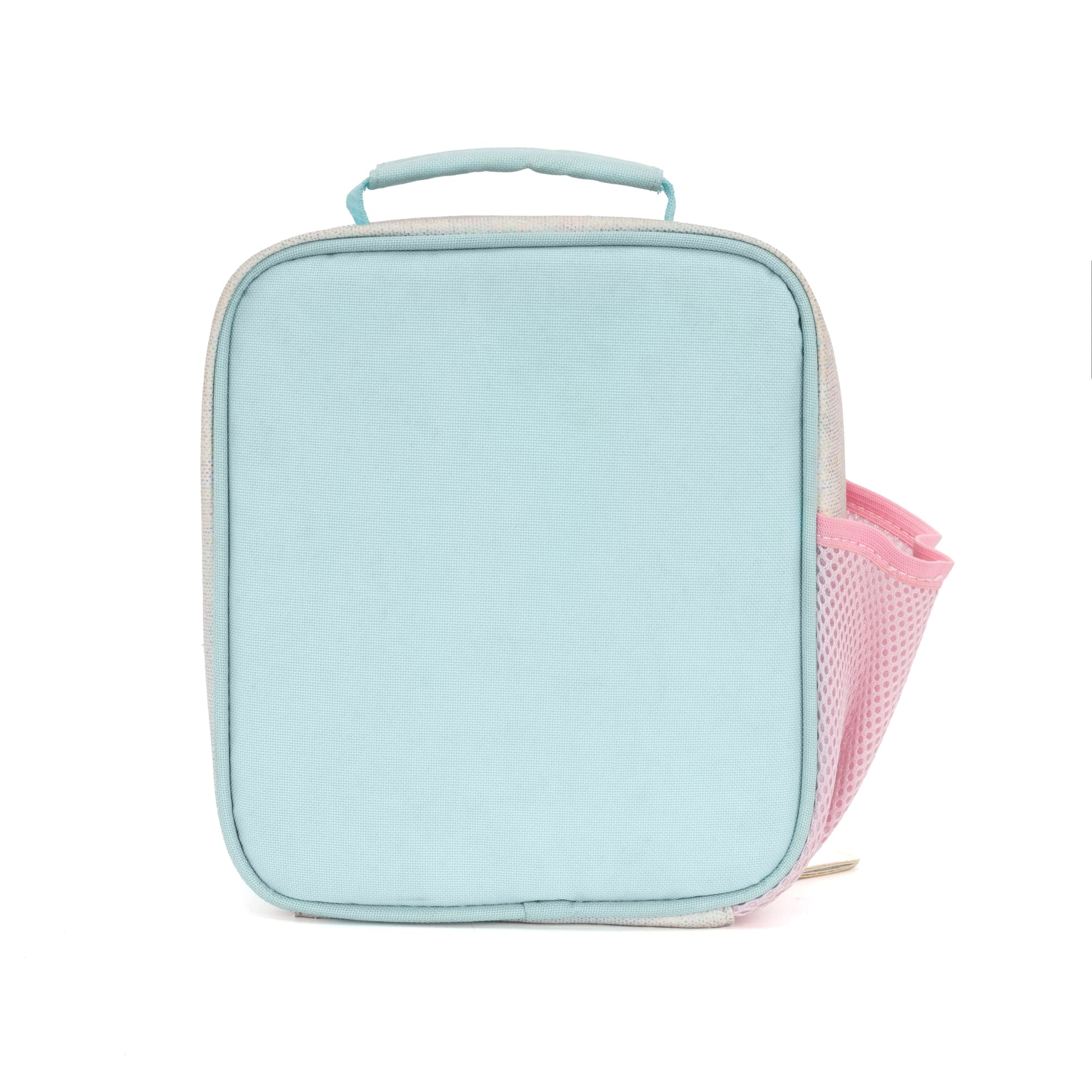
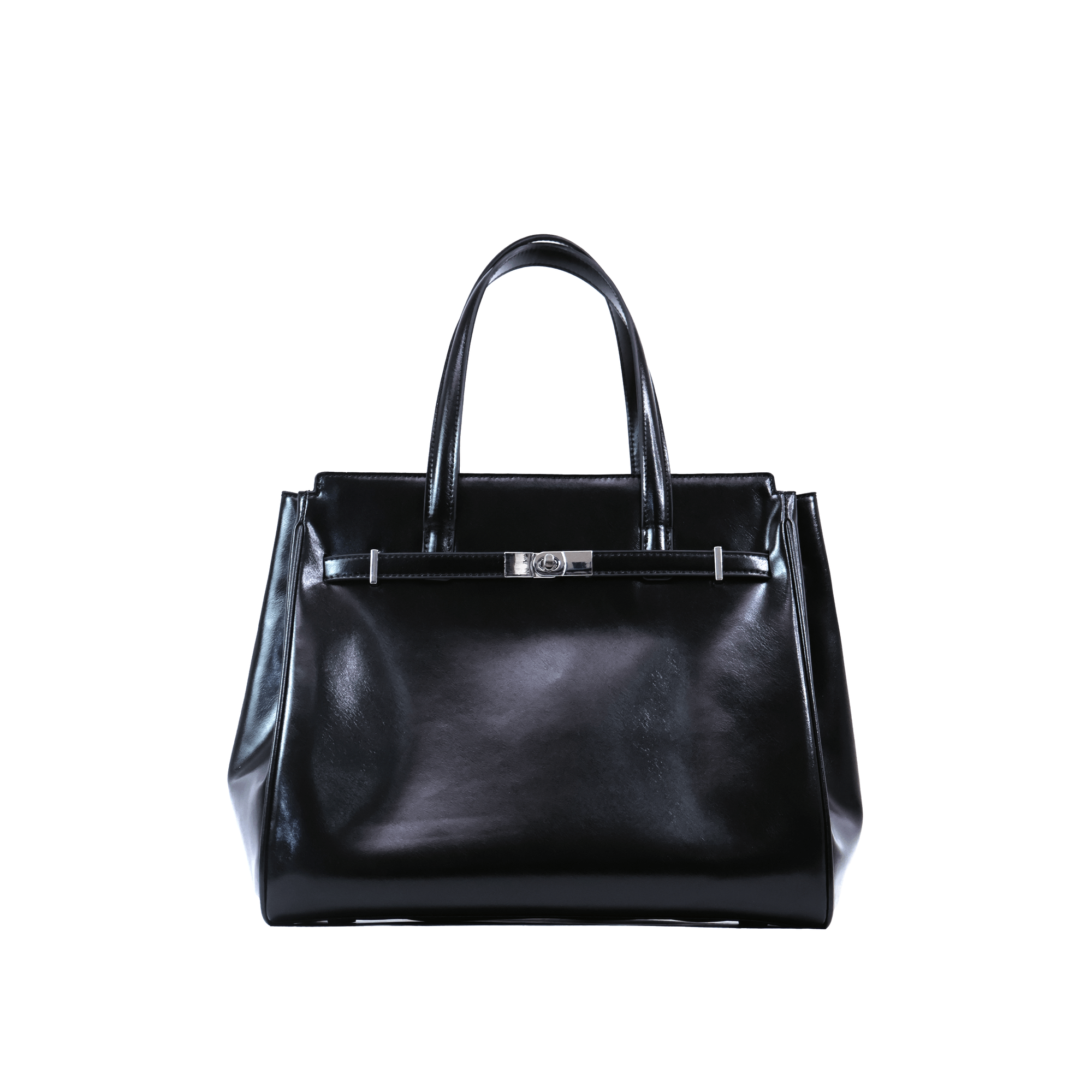
Custom tote bags you can order
Ready to source your custom tote bags?
Send the intended use, specifications, quantity, branding, and required date. We will identify any missing details before quoting or sampling.
Get a Custom QuoteSources and standards
- ISO 2859-1:2026 — Sampling procedures for inspection by attributes · International Organization for Standardization
- Incoterms rules · International Chamber of Commerce
- Standards FAQs — GRS and recycled-content claims · Textile Exchange
- REACH Regulation · European Commission